Action game · solo project
Blood Sword
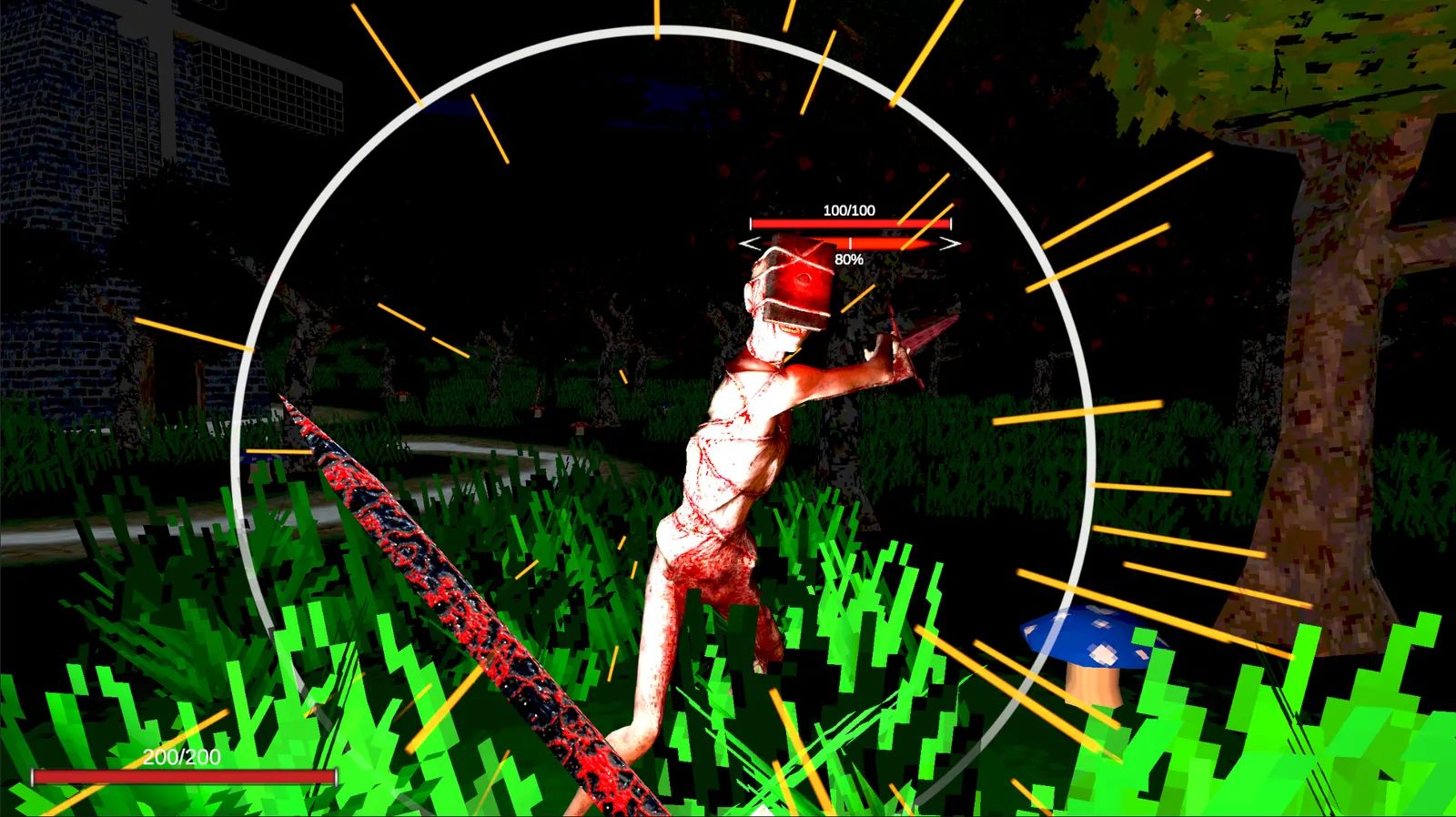
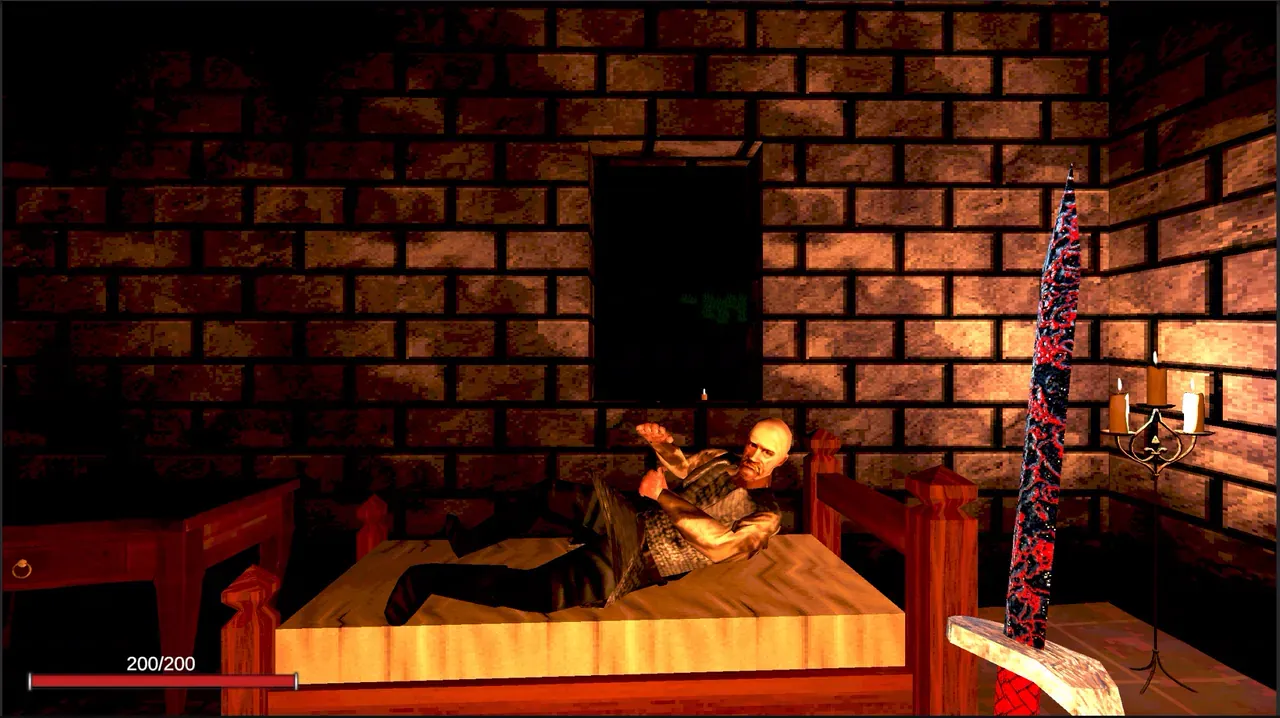
A first-person action game inspired by Sekiro, with a horror atmosphere: you swing the sword by moving the mouse, deflect, break the enemy’s posture and finish them off.
Fact sheet
- Engine
- Unity
- Year
- 2026
- Duration
- 1 month
- Team
- Solo
- Platform
- Windows, browser (WebGL)
Tools & technologies
- Unity 6
- C#
- JSON
- Blender
- Photoshop
- Retro Shaders Pro
My role
Solo project
- Combat design: directional attacks, deflection, posture, executions
- C# programming of the player, enemies and boss, with attack windows driven by Animation Events
- Data externalised to JSON, with an export tool built into Unity
- Replayability: randomised enemy attacks and spawns
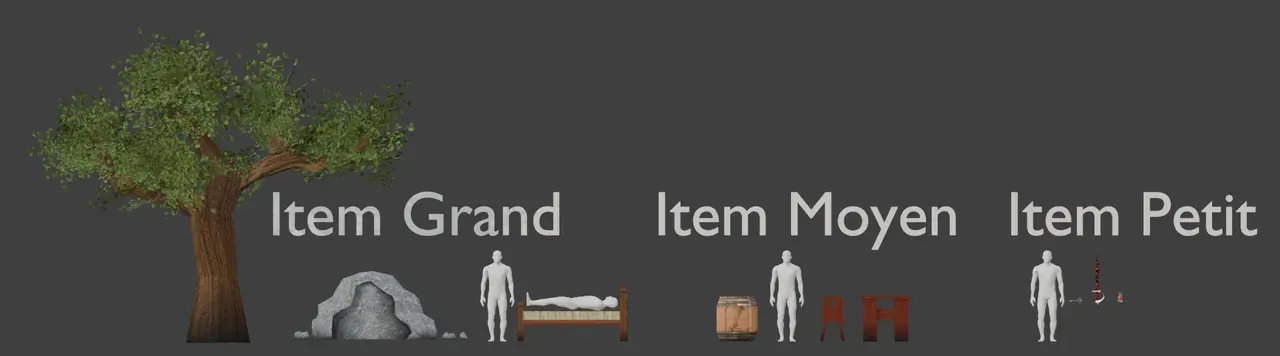
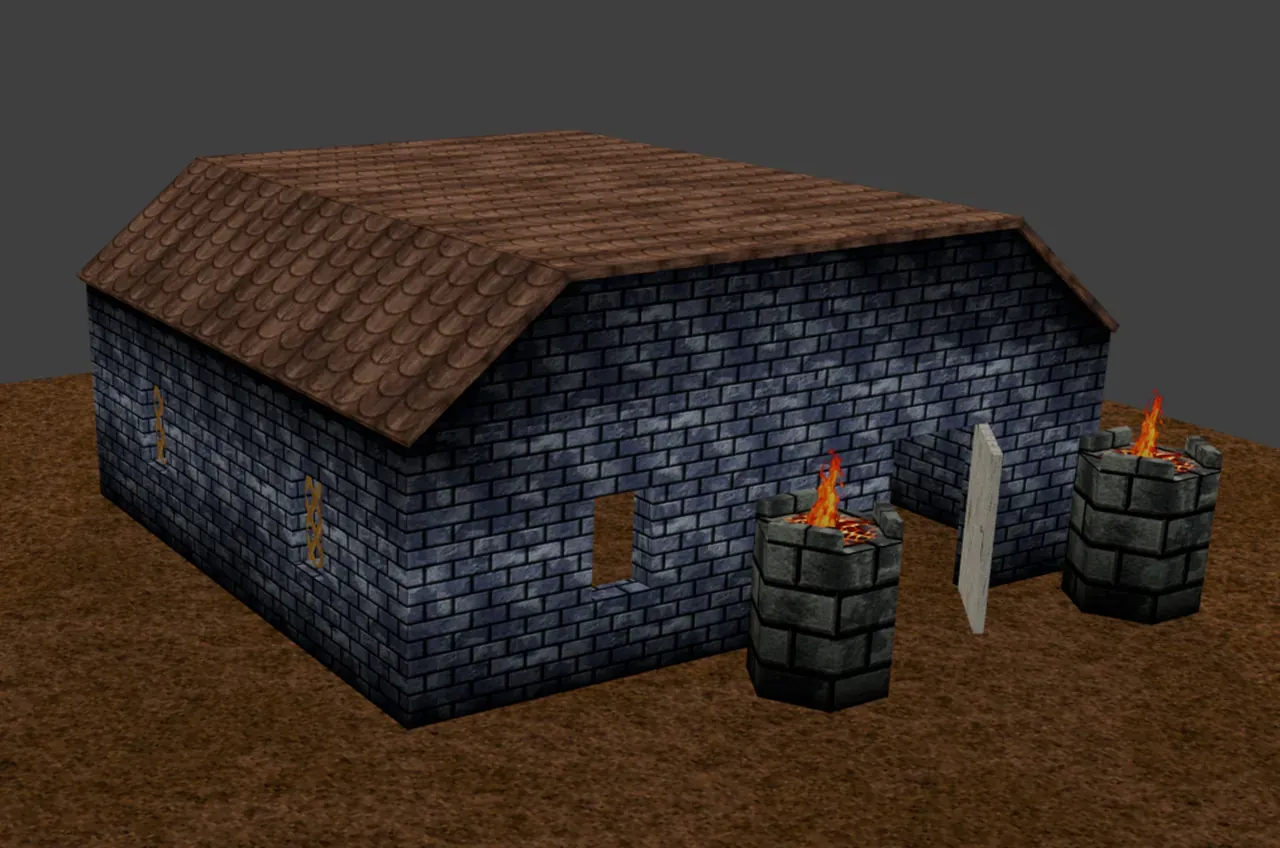
- About a dozen low-poly 3D models in Blender, vertex-coloured, with clean topology and no n-gons
- The player’s sword animations, in Unity
- Audio integration: sound effect manager and catalogue
Project images
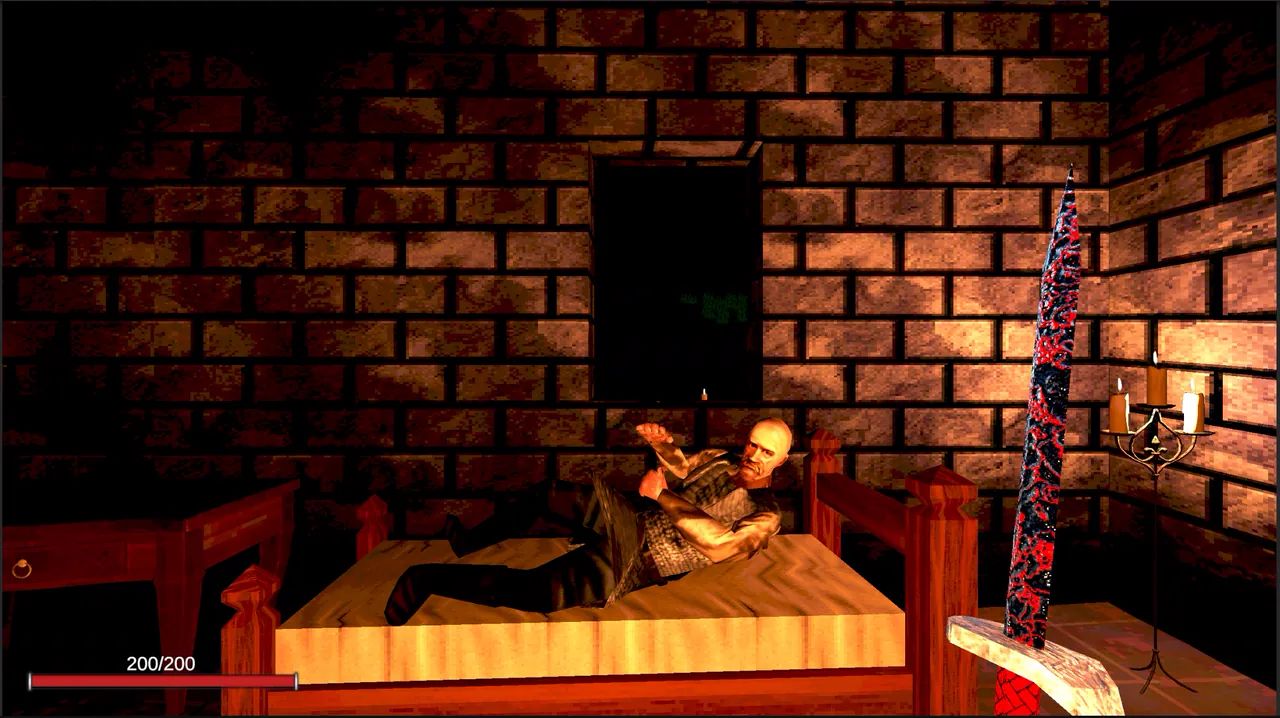
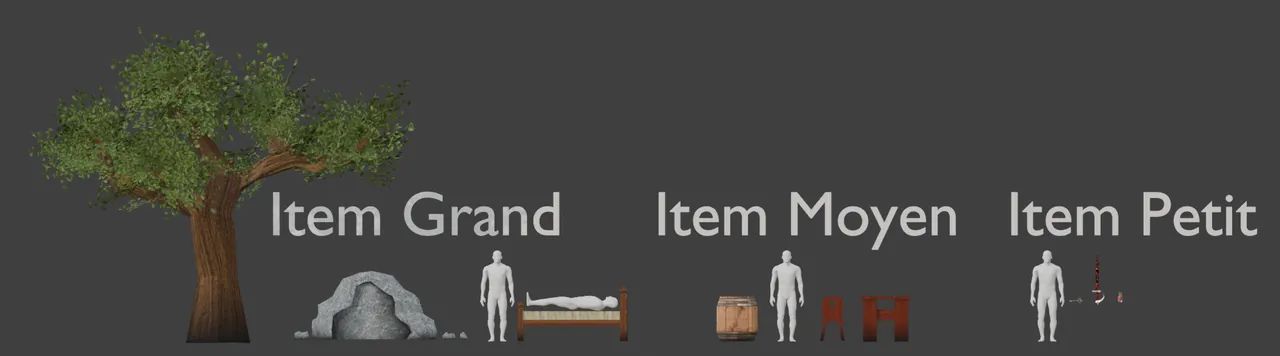
3D models made in Blender, scaled against a human silhouette 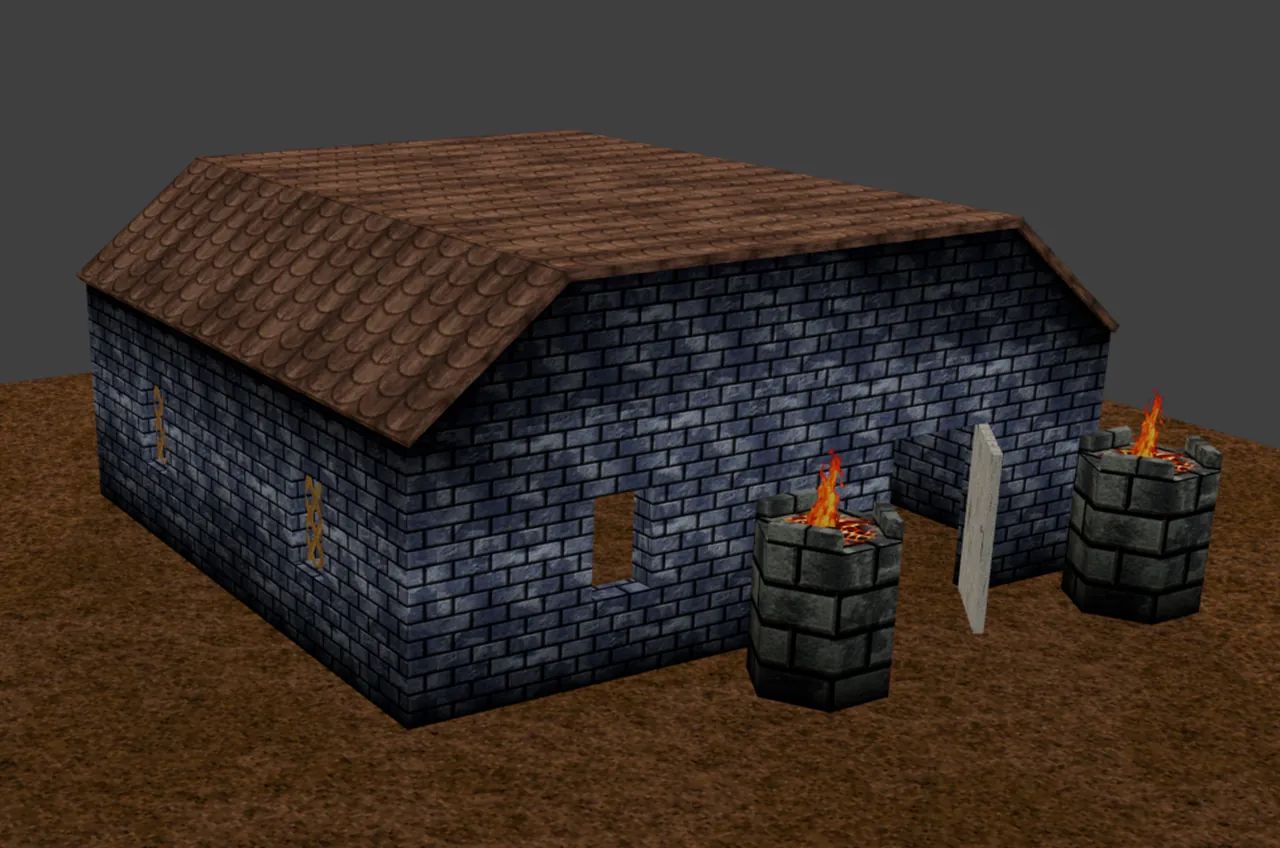
3D model made in Blender
The brief
A solo project set by our teachers, with two constraints: externalise part of the game data and make some of the 3D models in Blender.
Combat
Holding the left mouse button (LT on a controller) enters combat mode; you then strike left or right with the mouse or the right stick. Striking on the opposite side at the right moment deflects the enemy’s attack and raises their posture; a broken posture opens up an execution.
Data outside the code
Player settings, enemies, spawn points and quest steps are read from JSON files, so the game can be balanced without recompiling. A Unity tool places spawn points and exports the JSON in one click.
Art direction
A dark horror atmosphere (night, fog, the player’s torch) and a PSX-style render: vertex-coloured low-poly models and palette-indexed textures, inspired by King’s Field.
What’s next
A reworked version is planned: upward and downward strikes, and better attacks when two enemies go after the player at once.
Good to know
AI disclosure
AI-assisted code.
Third-party assets
Enemy animations (including Mixamo animations), some of the 3D models and environment, visual effects and sounds come from asset packs. The PSX-style render relies on Retro Shaders Pro. The posture gauge reuses the visuals, and very slightly the code, of an existing asset.